An over-height wall for a backyard pool
El Cajon has approved an over-height retaining wall for a new pool on a single-family lot through an Administrative Zoning Permit.
Service area · City of El Cajon
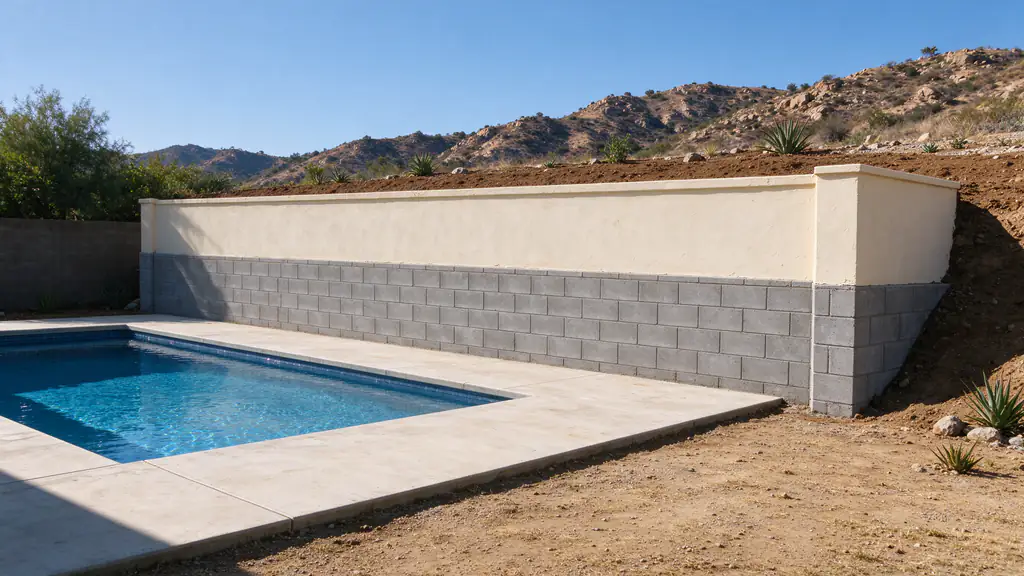
El Cajon has approved an over-height retaining wall for a new pool on a single-family lot through an Administrative Zoning Permit.
High shrink-swell shows at 82% of USDA sample points, the highest share among the cities sampled for this site.
These areas are unincorporated and County-permitted, with bedrock within a meter at about two thirds or more of sample points.
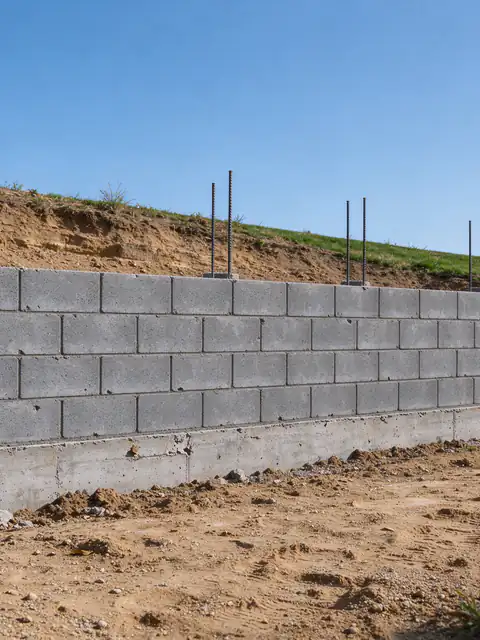
Block retaining walls in San Diego: grouted, reinforced CMU on a concrete footing, built to the City's IB 221 standard design or engineered.
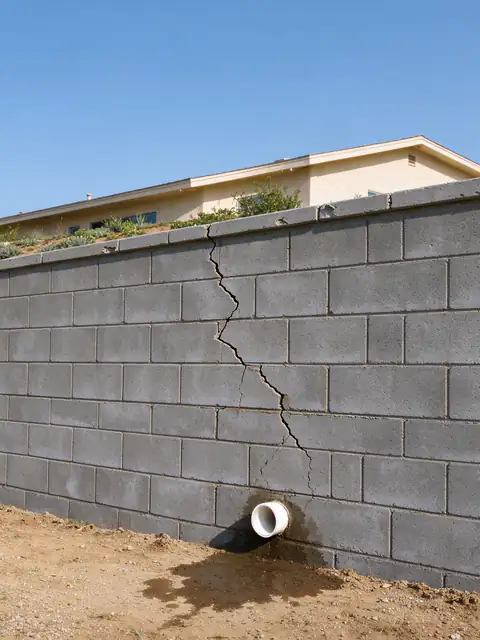
Retaining wall repair in San Diego for leaning, cracked and weeping walls, matched to the cause: drainage, footing or the load above.
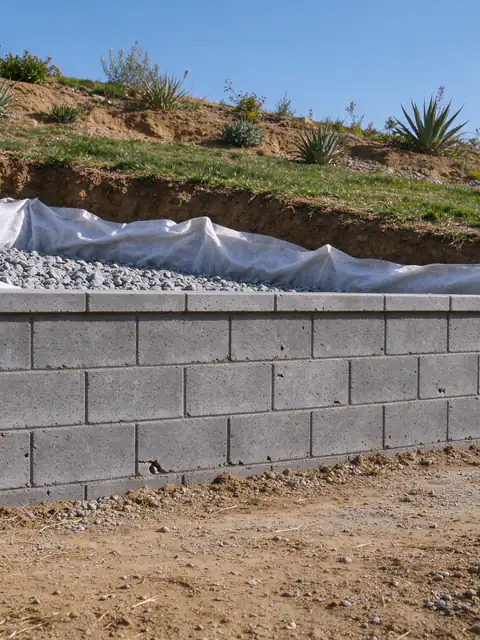
Retaining wall drainage in San Diego: gravel, fabric and perforated pipe behind new walls, plus retrofits for blocked drains.
Last Updated:
A retaining wall in El Cajon can need two separate approvals: a building permit for the structure, and an Administrative Zoning Permit if the wall is taller than zoning allows where it stands. Batterline San Diego Retaining Walls offers and manages retaining wall work in El Cajon and its East County neighbors, from new block retaining walls to repairs, and five areas here mean four different permit offices.
El Cajon handles over-height walls through an Administrative Zoning Permit, issued by the City’s Planning side of Community Development. City records show the range: one permit covered an over-height retaining wall to fit a new pool behind an existing single-family home, and another a combined retaining and screening wall with a maximum apparent height of 10 feet around a 29-unit development (received July 30, 2024). The City’s building permit threshold for retaining walls is confirmed for each address. How zoning limits a wall’s height is covered in the guide to how tall a retaining wall can be.
The soil is the other half. In a USDA soil survey sample, 88% of points show moderate or higher shrink-swell and 82% high, the highest high-shrink-swell share among the cities sampled for this site. Most of the city is gentle, with 20% of points on slopes of 15% or more, so the pressure on a wall comes from the clay and the water more than the slope. El Cajon’s station averages 11.63 inches of rain a year, 83% of it from November through March (NOAA climate normals). A wall on that clay needs its drainage zone working before those months, and the expansive clay guide explains why. About two thirds of homes were built before 1980 (Census ACS).
La Mesa has its own Building Division. Its soils are mostly Redding-Urban land complex, with high shrink-swell at 75% of USDA sample points, and 10% of a sample falls on slopes over 25%. About 73% of homes were built before 1980 (Census ACS).
Lemon Grove, permitted by its own Development Services, has the strongest clay signal of these areas: every sample point shows moderate or higher shrink-swell and 90% high. It is mostly flat, with 3% of a sample on slopes over 25%, and 39% of homes were built before 1960 (Census ACS).
Spring Valley is unincorporated and County-permitted. It is steep and rocky, with 32% of a sample on slopes over 25%, 38% of soil points on slopes of 30% or more, and bedrock within a meter at 67%. County PDS building permit records list 42 retaining wall permits with a Spring Valley mailing address issued between January 1, 2019 and December 5, 2023.
Mount Helix, in the Casa de Oro-Mount Helix area, is also County-permitted. Its ground is granitic Vista coarse sandy loam and Cieneba-Rock outcrop, with bedrock within a meter at 70% of points and 65% on slopes of 15% or more. Most homes are single-family, 82%, and 80% predate 1980 (Census ACS). On rock like that, digging the footing and drain zone shapes the wall, and failing slopes call for slope repair rather than a wall alone.
El Cajon, La Mesa and Lemon Grove each issue their own building permits, with thresholds confirmed per address. Spring Valley and Mount Helix go through County Planning and Development Services, which requires a permit except for walls under 3 feet from the top of the footing holding no surcharge, and needs a licensed design where a foundation, driveway or parking sits within one wall height of the top. The permit guide and cost guide cover both systems.
Planning a wall in El Cajon or the East County hills? Get an Estimate.
Share the wall's height and length, what sits above it and which city or community the lot is in. The estimate names the permit office and the design steps the wall is likely to need.
When it is taller than the City's zoning allows for its location. El Cajon handles over-height walls through an Administrative Zoning Permit, separate from the building permit. The height limit that applies and the building permit threshold are confirmed with the City of El Cajon for each address before design.
It can. City of El Cajon records include an Administrative Zoning Permit for an over-height retaining wall built to fit a new pool behind an existing single-family home. A pool near a wall adds load and water, so the design covers both.
By the County. Spring Valley, like Mount Helix, is unincorporated, so retaining wall permits come from County Planning and Development Services, whatever the mailing address. County bulletins require a permit for walls except those under 3 feet from the top of the footing that hold no surcharge.
Both cities sit largely on expansive clay. High shrink-swell shows at 75% of USDA sample points in La Mesa and 90% in Lemon Grove. Clay that swells when wet pushes harder on a wall than dry soil, so a free-draining gravel zone, working outlets and an engineered design matter even on fairly flat lots.
An unincorporated County retaining wall permit runs about $1,020 for an over-the-counter review and about $2,700 with full plan check. The wall is separate: segmental block typically runs about $40 to $140 per square foot of face.
Why shrink-swell clay pushes harder on a wall, where it is mapped across San Diego County, and what an expansive soil retaining wall needs that a wall on sandy ground doesn't.
The City's zoning height limits for each part of a lot, how tiered walls are spaced, how fences on top are measured, the County's approach, and why a wall can be legal in height and still need a permit and an engineer.
Every trigger the City of San Diego and the County use, from the 3-foot rule and surcharge loads to engineering, soils reports, coastal permits, zoning heights, licensing, fees and inspections.
Typical San Diego-area ranges for each wall type, what sits inside the price, the permit fees the City and County publish, and three worked budgets.
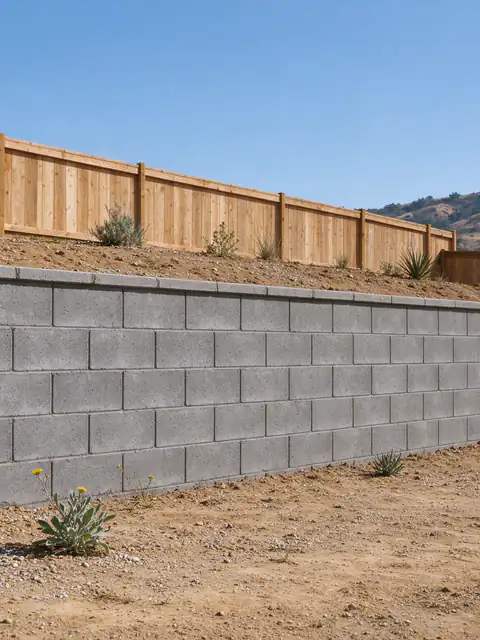
City of Santee. A separate Engineering retaining wall permit near property lines and in hillside areas.
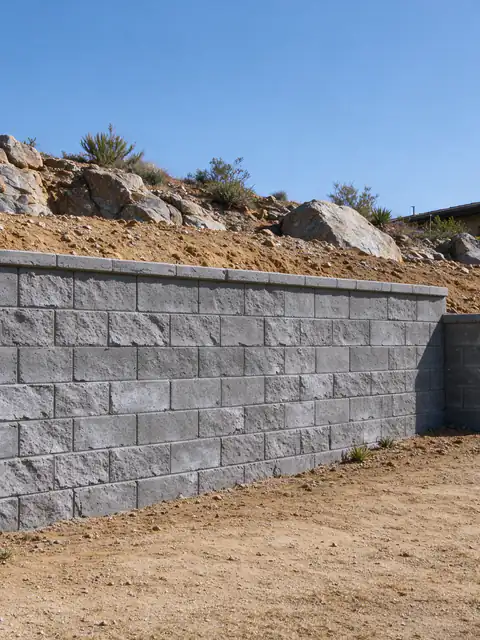
City of San Diego. Rocky slopes over shallow bedrock and slide-prone formations.
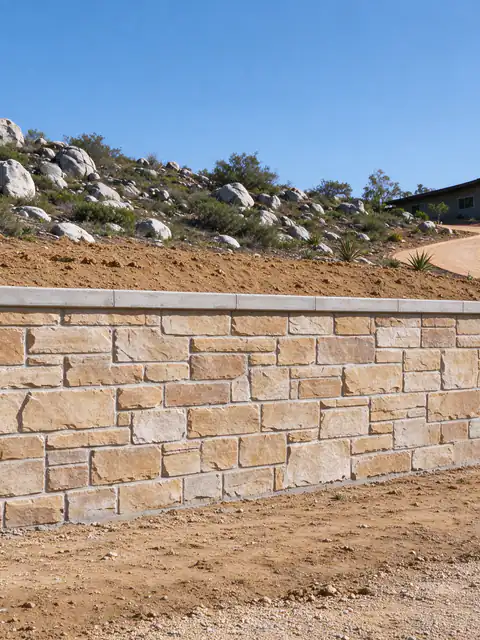
County of San Diego (unincorporated). Rock-bound terrain that drives excavation and wall height.
Tell us what the wall is doing, how tall it is from the lowest visible point, what sits above it and your ZIP code. Photos of the face, the top and any drain outlets make the first conversation more useful.